
For Alok’s Rave the World show at the O2 Academy Brixton, lighting designer and show director Alexander Hesse of A Light Production built the rig around 24 GLP TWYN fixtures, hung alongside 12 JDC1 on a single truss behind the Brazilian DJ. The design was a deliberate step away from the scale of Alok’s larger productions, and the TWYN spent most of the evening doing something other than what a hybrid strobe is usually asked to do. “The TWYN was a very good fixture for shaping the stage and using it more as a decoration light, not just a strobe or a light pointing out toward the crowd,” says Hesse.
Hesse works as creative and show director at A Light Production. He has been Alok’s lighting designer and operator for the past five years, a relationship that began when he approached the artist during lockdown in 2020 and led to their first show together at Untold Festival in Romania. His relationship with GLP goes back further still, to around 2017 with an introduction to Mark Ravenhill, and the first fixtures Hesse had hands on were the JDC1 and the impression X4 Bar 10 and 20.
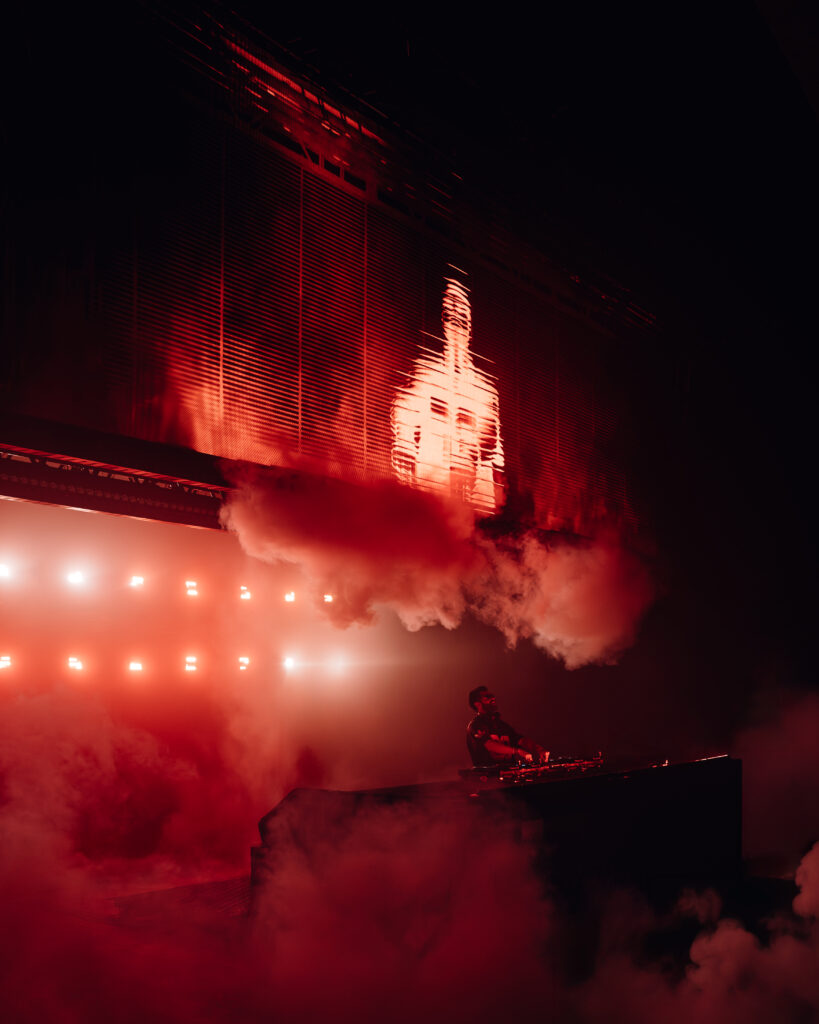
“Everybody was using beams. All the EDM artists were using beams, and this was a flat linear fixture with individual cell control and zoom. It was something very different from what had been used,” says Hesse. “Creatively, it was a fixture I could use in a different manner, putting video content and bitmaps on the lights rather than just giving the crowd a certain interaction with it.”
Brixton itself shaped the brief to this recent Alok project involving GLP. The O2 Academy is an amphitheater with banked sightlines looking down onto the stage, intimate by the standards of a touring electronic show, and it’s full of history.
“Everybody from the UK knows that you start there. Every band that comes out that’s new and upcoming starts there, and then the next step is Alexandra Palace, and then you would probably go into the O2 Arena,” says Hesse. “Brixton Academy has so much history in it. It’s quite an intimate venue. And it’s an older venue, but it’s a fun venue.”
What made this show unusual in Alok’s calendar was how much it held back. The artist’s largest production, the pyramid show, has run in Brazil around a 30-meter pyramid with roughly 500 fixtures, 1,500 drones, pyrotechnics and lasers. Rave the World at Brixton was conceived as its opposite and for a specific reason.
“For the pyramid show, it’s quite overstimulating. Retina fatigue is a term I would use, as it’s just so overwhelming,” says Hesse. “The show we did at Brixton Academy keeps it cool, but very minimalistic, and it doesn’t try to fry people’s eyes.”
Behind that decision sits something Hesse has watched change across the touring circuit. He describes audiences who increasingly film the show rather than dance, and a Brixton show built around the idea that people might live more in the moment.
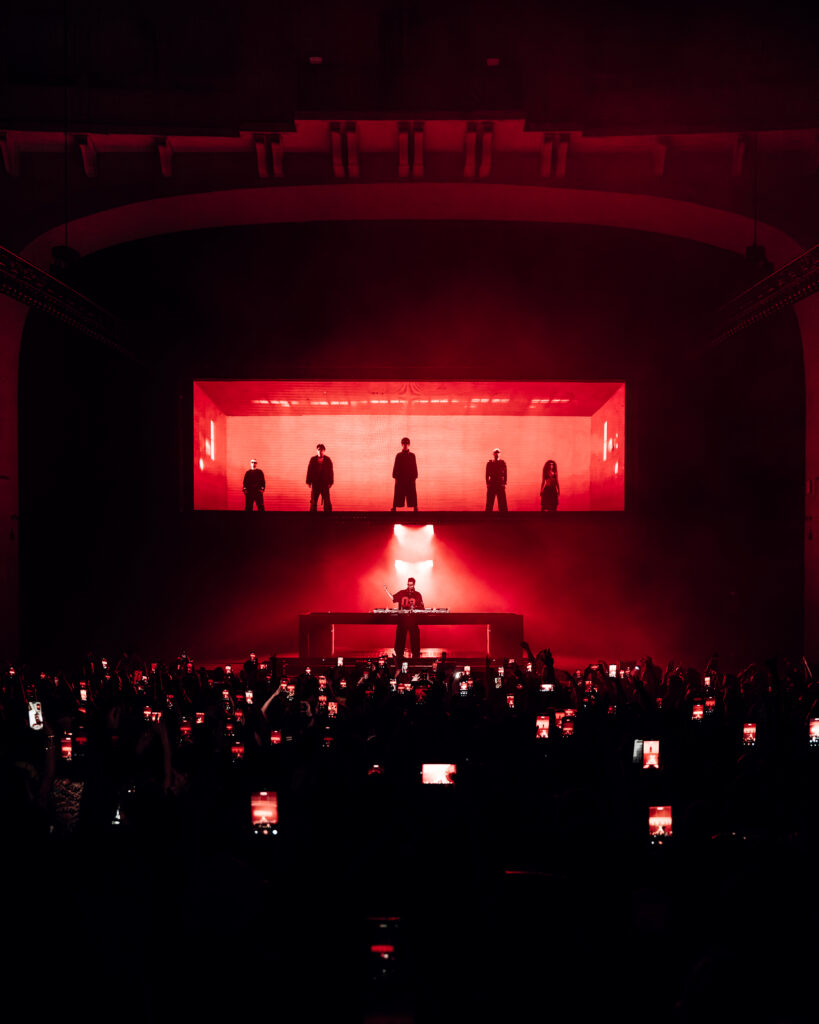
“Alok wanted to be more focused on the music. Today’s generation of shows has changed from what it was before. A lot of people have stopped dancing and everybody’s solely filming the shows,” says Hesse. “I prefer to see people really enjoying what it is. Otherwise, it doesn’t feel like a concert. It feels more like an art exhibit. The Brixton show is about being present in a room and being integrated with the show in another way.”
Hesse puts the underlying question more sharply. “There’s this expression – do you climb the mountain to see the world, or do you climb the mountain for the world to see you?” he says. “I’m a person who wants to see the world rather than having people see me.”
The rig reflected that thinking. All fixtures on the truss behind Alok sat in a single structure. Twelve GLP TWYN were located along the top, and 12 additional TWYN fixtures were along the bottom. Twelve JDC1 were arranged between them, with six JDC Line 1000 elsewhere in the design. Above the artist hung a box measuring 10 meters wide and three meters high, with Alok positioned directly underneath it.
The TWYN fixtures in the rig combine two lighting systems in one double-sided moving head, pairing a Creos-derived washlight on one face with a JDC Burst 1-derived strobe and color plate on the other. Hesse used it primarily for the former, and primarily pointed away from the audience.
“What I wanted was a backlight. The TWYN is a great backlight, and by tilting the fixture you reveal the silhouette of the box from behind, and you use the room as well,” says Hesse. “I used it to light up the venue of Brixton Academy, the pillars and the back of the LED, and you get this black shadowed silhouette of the box floating in the air.”
The show runs on grandMA3. Alok supplies tracks that Hesse timecodes, but a substantial part of the set is left open so the artist can improvise and read the room, which rules out locking everything to a timeline. Hesse’s answer has been to lay the console out as an instrument in its own right, playing it the way a pianist plays keys rather than triggering a fixed sequence.
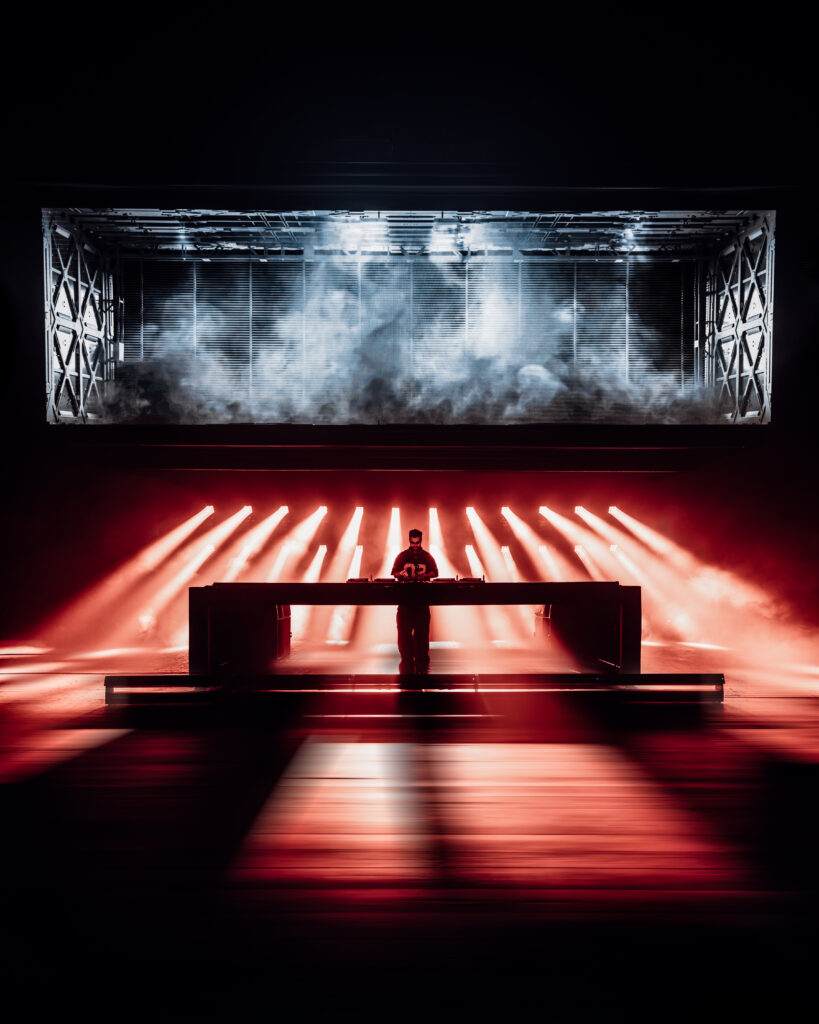
Since the design is heavily video-driven, how the fixtures’ pixels are oriented in the console mattered as much as where the units hung. The TWYN’s control attributes handled that without an issue.
“That fixture had all the switches in it – tilt invert, pixel invert, segment invert, white cell invert,” says Hesse. “The show is very video-based in terms of the orientation of how the pixels are laid out, so it worked really smoothly. I didn’t need to spend a lot of time on the orientation of how the fixture was set up. It was very straightforward.”
The artist’s response focused on the same qualities the design had been built around.
“Alok loved the architectural structure of the lights, how I made different positions, the different position looks that I did, and the different grouping of the lights,” says Hesse. “He really, really liked it.”
Photo credits: Clément Protin
